

How to Spot a Quality Reborn Doll Before You Buy
Buying Guide
How to Spot a Quality Reborn Doll Before You Buy
⚡ Quick Answer
A quality reborn doll has multiple thin layers of hand-applied paint, weighted limbs that feel realistic, finely rooted or micro-rooted hair, smooth seamless seams, and comes with clear material info (vinyl or silicone) and artist credentials or certificates of authenticity.
Why Materials Matter Most
Every reborn doll starts with a base material, and this single choice affects weight, texture, durability, and price more than anything else. Vinyl is the most common material, prized for its softness and affordability, while silicone offers hyper-realistic skin texture and is fully waterproof, but comes at a premium. If you're browsing vinyl reborn dolls, expect a matte, slightly powdery finish that mimics baby skin beautifully when done right. Silicone dolls, on the other hand, have a glossy, almost translucent quality that catches light differently on the cheeks and knuckles.
A cheap material substitute is often the first giveaway of a poor-quality doll. Some mass-produced dolls use a stiffer, shinier plastic that never quite achieves that soft newborn look no matter how good the paint job is. Gently press a fingertip into the doll's arm at a shop or ask the seller for a close-up video. Real vinyl will have slight give; hard plastic will not budge at all.
Pro Tip
Ask the seller directly: "Is this doll made from platinum-cure silicone or standard vinyl?" A knowledgeable seller will answer instantly and in detail. Hesitation or vague answers are a warning sign.
Paint Application: The Telltale Sign
This is where true artistry separates a $60 knockoff from a $350 masterpiece. Genuine reborn artists apply 15 to 30 thin layers of paint by hand, building up translucent tones that mimic veins, capillaries, and the subtle mottling seen on real newborn skin. Each layer is heat-set in a small oven or with a heat gun before the next is applied. This process alone can take 20+ hours per doll.
Cheaper dolls are often airbrushed in one or two passes with an opaque, uniform color that looks flat under natural light. Turn the doll toward a window: quality paintwork will show depth and subtle color variation around the joints, cheeks, and soles of the feet. Flat, cartoonish coloring is a dead giveaway of mass production.
Did You Know?
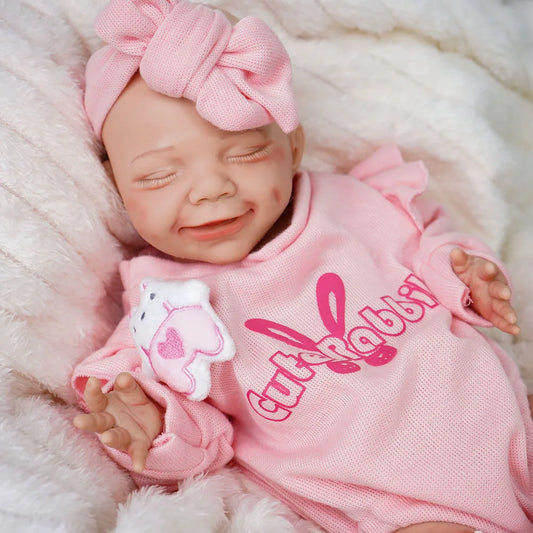
Many professional reborn artists add tiny painted "imperfections" like faint blotches or newborn rashes on purpose — it's actually a mark of realism, not a flaw.
Weighting and Realistic Feel
A quality reborn doll should feel like holding an actual infant, typically between 5 to 9 pounds depending on size. This weight comes from glass beads, polyfill, or specialty weighted pellets carefully distributed inside a cloth body. Poor-quality dolls are often hollow or stuffed unevenly, feeling stiff or lopsided when cradled.
If you're shopping for a newborn reborn doll, hold it the way you would a real baby — support the head and feel how the weight shifts. It should settle naturally into the crook of your arm, not flop rigidly or feel like a sack of rice. Sellers who list precise weight and length specs (like "7 lbs, 19 inches") are generally more transparent and detail-oriented than those with vague descriptions.
20-30hrs
Average time to hand-paint one doll
5-9 lbs
Realistic weight range for full-size reborns
300+
Individual hair strands rooted per micro-rooted scalp
Hair Rooting Techniques That Reveal Skill
Hair is another area where craftsmanship shines — or fails. Quality reborns feature either mohair wigs that are hand-styled and glued with precision, or hand-rooted hair where individual strands are looped through the scalp with a needle, one at a time. This can take an artist anywhere from 6 to 15 hours depending on hair density and length.
Look closely at the hairline and part. Rooted hair should have natural direction and slight irregularity, just like a real baby's whorl pattern. Glued-on wig caps often show visible seams or an unnaturally uniform part line. If you love the fuzzy, wispy look of newborns, check listings under sleeping reborn dolls, which often showcase this detail beautifully since the closed eyes draw attention upward to the hairline.
Watch Out
Synthetic doll hair that feels stiff, shiny, or plastic-like almost always indicates a lower-tier production doll, even if the box or listing photos look convincing.
Seams, Joints, and Body Construction
Flip the doll over and examine where the vinyl limbs attach to the cloth body. On a well-made reborn, this transition is nearly invisible, with fabric carefully tucked and stitched to blend with the vinyl's skin tone. Cheaper dolls often show fraying threads, mismatched fabric colors, or gaps where stuffing peeks through.
Joint mobility matters too. Quality reborns typically have jointed hips, shoulders, and sometimes knees, allowing for natural, poseable positioning. If you're considering a cloth body reborn doll, gently move each limb — it should articulate smoothly without excessive resistance or looseness. A doll that feels rigid at the joints, or one where limbs flop with zero support, usually signals cheap internal armature or none at all.
- Seams blend naturally with no visible fabric-to-vinyl gap
- Joints move smoothly without squeaking or catching
- Weight distribution feels centered and balanced when cradled
- No strong chemical or plastic odor straight out of the box
- Fingernails and toenails are individually detailed, not just painted blobs
- Certificate of authenticity or artist signature is included
Red Flags That Scream Low Quality
Beyond the physical doll itself, pay attention to how it's sold. Listings with only one or two heavily filtered photos, no close-ups of the face or hands, and suspiciously low prices (under $30 for a "full silicone" doll) are almost always misrepresented. Real silicone reborns rarely sell for less than $150, given material and labor costs.
Another red flag: sellers who can't answer basic questions about the artist, the kit used, or the paint process. Established reborn communities value transparency, and genuine sellers are usually thrilled to talk shop about their craft.
"The moment a seller can't tell you who sculpted the kit or how many paint layers were used, that's your cue to keep looking."— Reborn Artist Collective, community forum
What You Should Actually Pay
Understanding fair pricing helps you avoid both scams and overpaying. Here's a realistic breakdown based on typical market ranges for genuine, well-crafted dolls:
| Doll Type | Typical Price Range | What Drives the Cost |
|---|---|---|
| Entry-level vinyl reborn | $60 – $150 | Fewer paint layers, synthetic wig, basic weighting |
| Mid-range artist vinyl reborn | $150 – $400 | Hand-rooted hair, multiple paint layers, glass eyes |
| Full silicone reborn | $400 – $2,000+ | Platinum silicone, sculpting detail, limited edition kits |
| Mini or collector reborn | $40 – $120 | Smaller scale, still hand-finished by an artist |
If your budget is tighter, you can absolutely find honest quality without overspending. Browse cheap reborn dolls that are transparently marketed as budget-friendly vinyl pieces rather than mislabeled as premium silicone. Similarly, mini reborn dolls offer a more affordable entry point while still showcasing hand-applied detail on a smaller scale.
Buyer's Insight
A $120 doll with visible artist credit and detailed process photos is almost always a better investment than a $200 doll with vague, generic stock images.
Where to Buy With Confidence
Reputable shops and marketplaces that specialize in reborn dolls tend to offer clearer specs, better return policies, and more consistent quality control than random marketplace listings. Look for sellers who categorize their inventory clearly — for example, distinguishing between girl reborn dolls and boy reborn dolls, or offering matched sets like twin reborn dolls for collectors who want a coordinated pair.
Also check whether the shop sells complementary items like reborn doll clothes and reborn doll accessories. A retailer that invests in a full ecosystem around the doll — outfits, blankets, pacifiers, feeding sets — usually understands the hobby deeply and is less likely to cut corners on the doll itself. If you're new to the hobby and want the full range of options in one place, browsing a curated reborn baby dolls collection is a smart starting point before narrowing down by material, size, or gender.
Ready to Find Your Perfect Reborn Doll?
Explore a hand-picked selection of realistic, high-quality reborn dolls crafted with genuine attention to detail. Every doll is chosen for its craftsmanship, so you can shop with total confidence.
Voir la collection →FAQ
A quality reborn doll features multiple hand-applied paint layers, realistic weighting, carefully rooted or styled hair, and smooth seams between vinyl and cloth. Knockoffs typically use single-layer airbrushed paint, hollow bodies with uneven stuffing, and synthetic wigs glued on with visible seams. The price difference reflects dozens of hours of skilled labor versus a few minutes of assembly-line production.
Not necessarily — it depends on your priorities. Silicone offers a more lifelike, glossy skin texture and is fully waterproof, making it popular for bath-time role play, but it's heavier, pricier, and less flexible. Vinyl is softer, lighter, more affordable, and easier for beginners to display and handle daily. Both can be high quality if made by a skilled artist using good materials.
Entry-level vinyl reborns from skilled artists usually start around $60 to $150, while mid-range dolls with hand-rooted hair and detailed paintwork run $150 to $400. Full silicone reborns, given their material cost and sculpting complexity, typically range from $400 to over $2,000 for limited-edition or highly detailed pieces. Anything claiming to be premium silicone under $50 should be treated with suspicion.
You can get a strong sense of quality from close-up, natural-light photos showing the face, hands, feet, and seams. Look for paint depth and variation rather than flat, uniform color, and check that hair looks individually placed rather than glued in a solid mass. Still, request additional photos or a short video from the seller if the listing only shows one or two staged images.
Absolutely. The base sculpt used matters a lot — well-known, licensed reborn doll kits from established sculptors tend to have more realistic proportions, finer detailing, and better vinyl quality than unbranded or bootlegged kits. Ask the seller which kit and sculptor were used; reputable artists are proud to credit their source material.
As soon as it arrives, inspect the seams, check joint mobility, smell for strong chemical odors (a sign of low-grade plastic), and compare the paintwork to listing photos in natural daylight. Weigh the doll if possible to confirm it matches the stated specs. If anything seems significantly different from what was advertised, document it with photos and contact the seller promptly for a resolution.
Tags:
Previous
Silicone vs Vinyl Reborn Dolls: Which One to Choose
Next
How to Dress and Accessorize Your Reborn Doll
Related articles
-
Oct 28 2026
Reborn Doll Gifts for Girls: The Best Choice by Age


-
Oct 16 2026
Baby Doll Pictures: Lifelike Reborn Dolls Up Close

-
Oct 16 2026
Most Realistic Reborn Dolls: What Makes a Doll Look Real


-
Oct 16 2026

